Exploring Consciousness with Lindsay Kokoska

This week, we're spending time with the work of Lindsay Kokoska, a Canadian multimedia artist whose practice moves between abstraction, surreal imagery, and digital exploration.
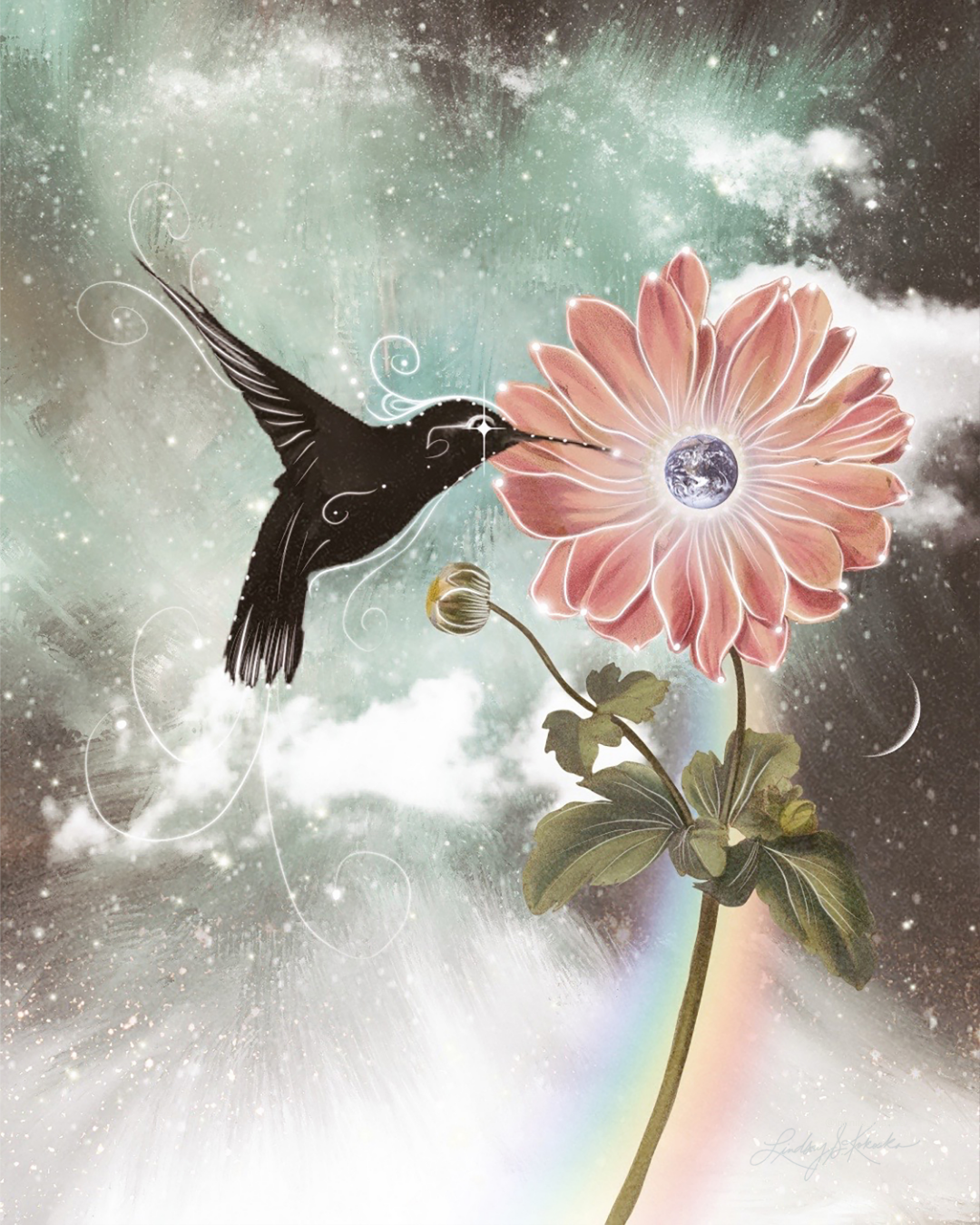
Lindsay works across traditional and digital mediums — painting, fine art compositing, animation, and generative AI — to create dreamlike environments inspired by the cosmos, inner awareness, and the unseen layers of human experience. Her visual language carries a quiet transcendental quality, inviting viewers to pause, shift perspective, and connect with something deeper.
What stands out in Lindsay's work is how it occupies multiple spaces at once. Her pieces feel both grounded and otherworldly, abstract and familiar, still and in motion. There's a meditative quality to the imagery and it is expressed through soft gradients, flowing forms, and layered compositions. All of this creates space for reflection without prescribing what that reflection should be.
Lindsay describes her work as "meditative visuals for an awakened world." That's not aspirational language. It's a description of what the work actually does. It slows you down and asks you to look differently. It reminds you that there are dimensions of experience that exist just beyond what we typically attend to.
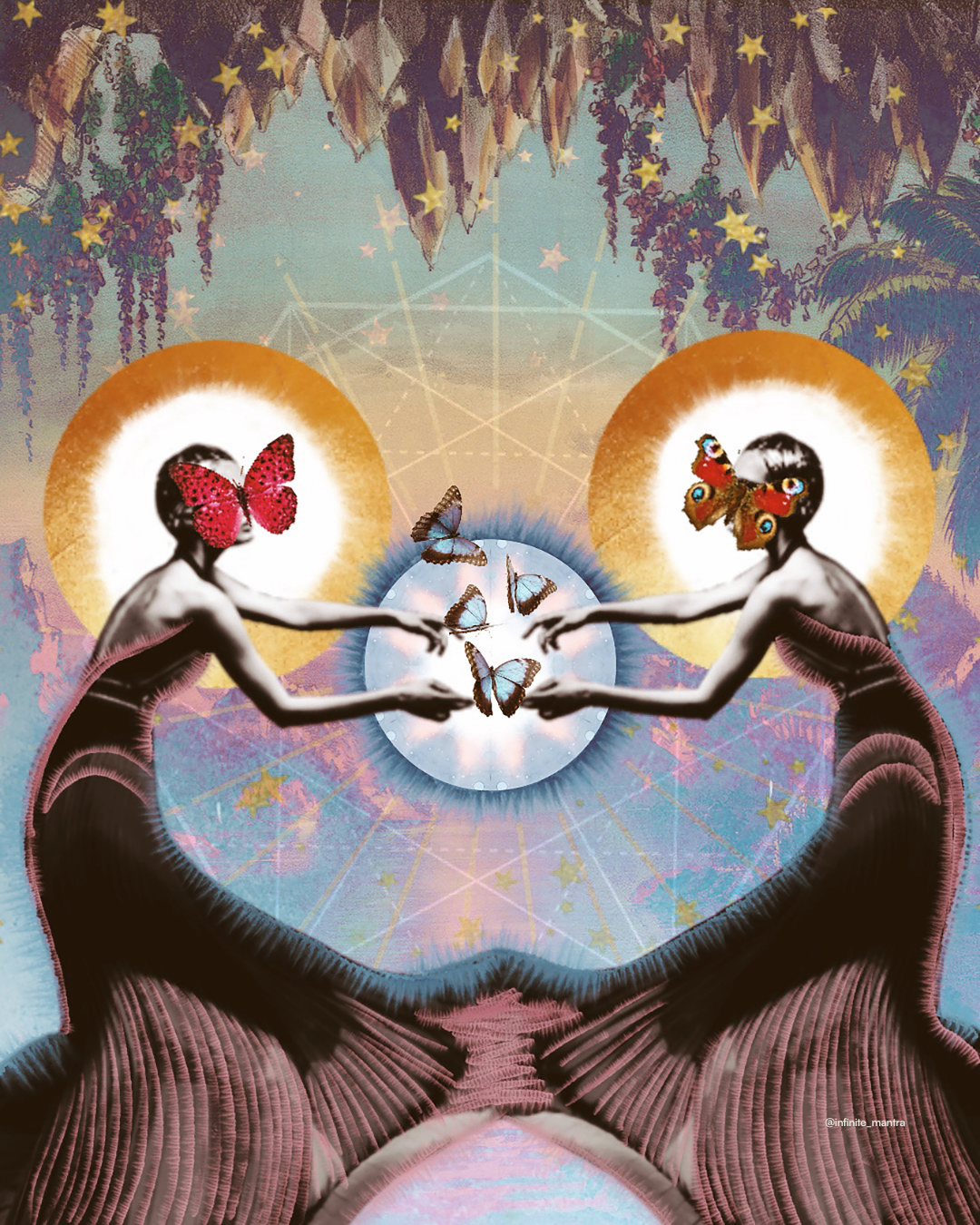
Her path to this practice has been shaped by both formal study and self-directed exploration. She holds a Master's degree in Graphic Art and has studied at the Toronto School of Art. With a background in education and marketing, Lindsay brings a thoughtful, intentional approach to both her creative process and how she shares her work with the world. She sees technology as a tool to amplify and diversify her collage and painting work.
Lindsay's work has been shown extensively from Art Basel Miami to immersive installations around the world. Her practice exists across physical galleries, digital platforms, and immersive experiences, reflecting her belief in the open possibilities of creativity.
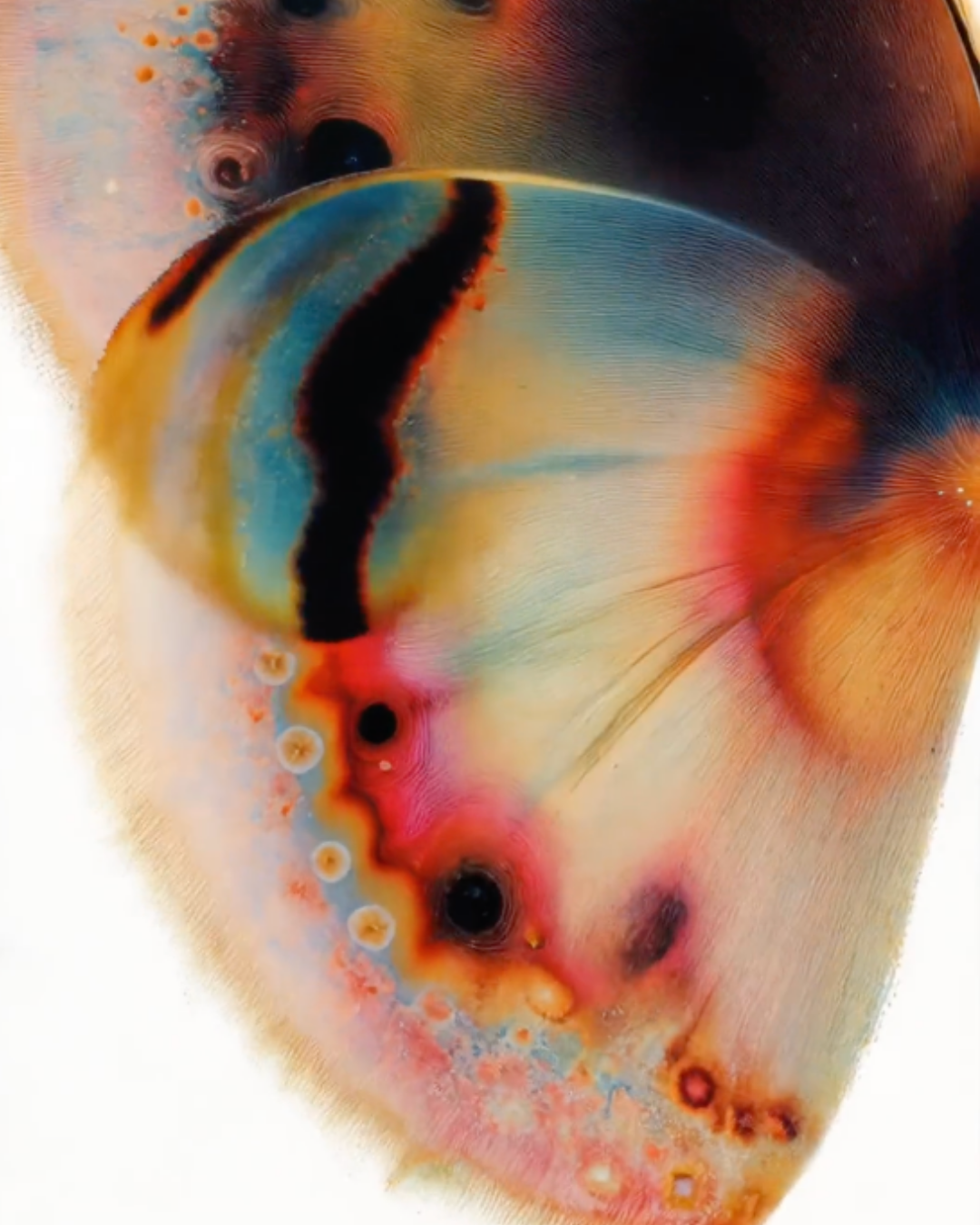
In her Patterns of Infinity series, Lindsay explores repetition, geometry, and movement through abstract digital forms. The work feels appropriate…patterns that could extend endlessly in any direction, suggesting something larger than what's contained in the frame.
Many of her series capture movement and color in a way that feels organic despite being digital. Soft gradients blend into one another, creating compositions that evoke natural phenomena: light through water, atmospheric shifts, energy in motion.

Lindsay layers figurative elements with surreal and abstract textures. The human form becomes a starting point rather than the sole subject, blending into dreamlike environments that feel both personal and universal.
What we appreciate about Lindsay's work is how it bridges traditional artistic practice with contemporary tools without losing sight of what art is meant to do: create space for awareness, connection, and the recognition that there's more happening beneath the surface.
As a result, Lindsay's work operates at a different frequency. Lindsay's practice reminds us that there are other rhythms available: slower, more expansive, more connected to something beyond the immediate. That there are more ways to see and be seen.
We are also really excited because Lindsay is currently working with soal to help grow our artist community and expand our socials! So if you haven't been following along on Instagram, you can see more of her work and process there.
What would you like people to know when they first come across your artworks?
When someone first encounters my work, I hope they feel something before they try to understand it. My pieces are not meant to be decoded in a literal way. They are invitations into a state of awareness. I work between traditional painting, digital compositing, and AI tools, blending them into visual environments that feel immersive and alive. The themes often revolve around light, consciousness, inner landscapes, and transformation.
I am interested in the quiet shifts that happen inside us. The moment before clarity. The space between breath and release. Much of my work explores the tension between shadow and illumination, not as opposites, but as collaborators in growth.
I want viewers to know that technology is a tool, not the soul of the work. The heart of it comes from lived experience, meditation, travel, motherhood, teaching, and deep personal reflection. If someone walks away feeling calmer, more present, or slightly more connected to their inner world, then the work has done what it was meant to do.
When thinking about where you are in your journey, what are you most excited about and what keeps you inspired for the future?
Right now I feel like I am standing at a threshold. I have spent years refining my voice and integrating emerging technologies into my practice. What excites me most is the expansion into immersive spaces. Projection, LED installations, domes, large scale environments. I want people to step inside the work, not just scroll past it.
I am also deeply inspired by the intersection of art, meditation, and education. I believe visual language has the power to regulate, soothe, and awaken something in us. As someone who has studied yoga and mindfulness across different cultures, I feel called to build experiences that merge aesthetics with emotional restoration.
The future feels open. There is so much possibility in how art can live beyond the frame. Collaboration with musicians, immersive sound design, architectural spaces. What keeps me inspired is curiosity. I am constantly asking what else is possible, how can this evolve, how can it serve people more deeply.
If you could go to dinner with any artist, who would it be and why?
I would choose Hilma af Klint. Her work was visionary and deeply spiritual, yet she created much of it in private, trusting that the world was not quite ready. I am drawn to her courage and her devotion to an inner calling.
She painted from a place of communion with something beyond the visible world. That resonates with me. I would want to ask her how she maintained conviction when there was no public validation. How she navigated doubt. How she trusted the long arc of time.
There is something comforting about artists who create ahead of recognition. It reminds me that the work is not always about immediate reception. It is about fidelity to vision.
What is the best piece of advice you've been given?
The best advice I have received is to stop waiting for permission.
Early in my career I often felt I needed validation. From institutions, from galleries, from gatekeepers. At some point I realized that no one was going to formally announce that I was ready. I had to decide that for myself.
This advice changed how I approached my practice. I began sharing work before it felt perfect. I applied to exhibitions before I felt fully established. I reached out to collaborators even when I felt intimidated.
It also applies creatively. Stop waiting for the right medium. Stop waiting for mastery before exploration. The courage to experiment has shaped my evolution, especially with AI and digital tools. Many people were skeptical. I was curious.
Permission is often self granted. Once I understood that, everything accelerated.
What is one thing you wish you'd be asked in an interview?
I wish more people would ask about the emotional labor behind the work.
There is a tendency to focus on tools, platforms, and achievements. Those are important, but they are not the full story. I would love to be asked how I navigate vulnerability in public spaces. How motherhood influences my sense of time and ambition. How doubt and resilience coexist in a creative life.
The reality is that being an artist requires constant negotiation with uncertainty. Financial uncertainty. Creative uncertainty. Personal evolution. I think it would be powerful to speak more openly about the invisible layers that shape the visible outcomes.
Art is not just production. It is processing. It is integration. It is healing in motion. I would welcome more space to talk about that.
How has your practice evolved over time?
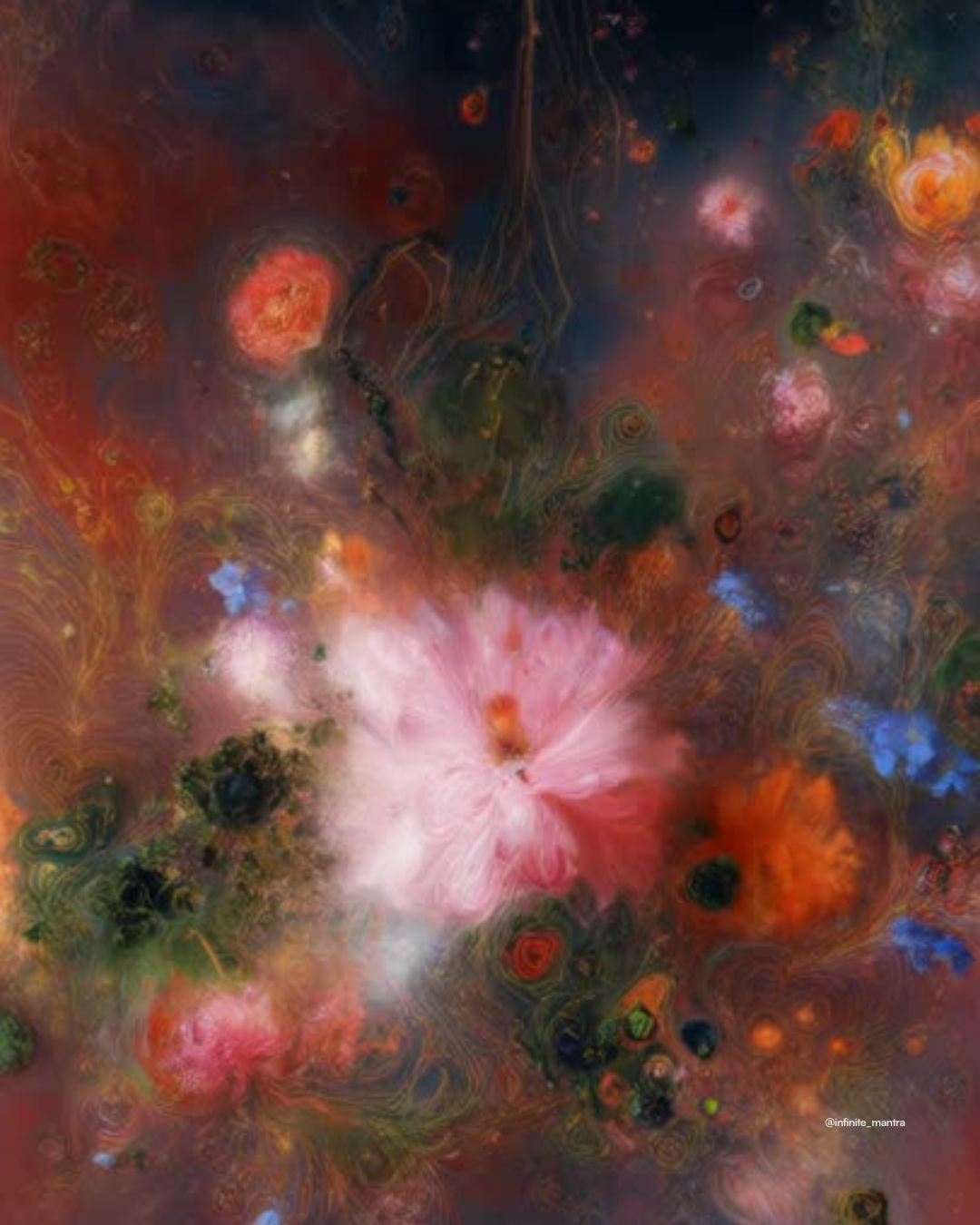
My early work was more contained and medium specific. I identified primarily as a painter. Over time, I began experimenting with digital compositing, animation, and generative tools. At first it felt like stepping outside of what was expected of me. Eventually it became clear that this was an expansion, not a departure.
Conceptually, the core themes have remained consistent. Light, consciousness, transformation, inner landscapes. What has evolved is the scale and dimensionality. My work now often moves. It breathes. It loops. It exists in LED screens, immersive installations, and digital platforms.
I have also become more intentional. Earlier, I created from instinct. Now I create from both instinct and strategy. I understand licensing, editions, and immersive experiences. I see the ecosystem around art.
The practice has matured. It feels integrated rather than fragmented.
What music are you listening to these days?
I move between calming, meditative soundscapes and nostalgic electronic music. I listen to a lot of cello music by The Wong Janice. The cello feels grounding and emotional in a way that opens space in my mind when I’m creating. It slows everything down and allows me to work from a more intuitive place.
At the same time, I love late 1990s and early 2000s trance. The atmospheric kind. Artists like BT, especially tracks like Mercury and Solace. That era of trance has this expansive, almost cinematic quality. It builds slowly, layers textures, and feels immersive rather than aggressive. There’s something about that emotional lift and repetition that helps me enter a deep flow state.
Most of what I listen to is instrumental. Without lyrics, I can think visually. The pacing of the music often influences the pacing of my work. The build, the release, the softness, the intensity. Sound becomes a quiet collaborator in the studio, shaping the emotional arc of what I’m creating.
Did you always know you wanted to be an artist? If so, was there a particular moment that gave you the confidence to start sharing your work with the world?
Yes, I knew.
I remember being in grade two, working on an art project in class. When I finished, the other kids gathered around my desk and said, “Wow, that’s so cool.” I can still feel that moment. It wasn’t about praise. It was the realization that something I made could affect people. That stayed with me.
The second defining moment came when I was 18. I was at a friend’s summer place by a lake and we were all painting casually for fun. When we finished, the same thing happened. My friend looked at me and said, “Lindsay, you really have a talent. You’re really artistic.” I remember knowing right then that this wasn’t just a hobby. It was part of who I was.
I have always created. I never stopped. Later, when I was living in South Korea, I was still painting traditionally, surrounded by incredible art supply stores, but I also discovered digital art through the tech markets there. I bought a Wacom tablet, downloaded Photoshop, and taught myself how to use it. That was the beginning of integrating technology into my practice.
As for sharing my work, I have always shared it. There were moments where I questioned whether I should hold back, but ultimately I realized this is me. Art is how I process and connect. So I kept putting it out into the world. And I still do.


